
How to Run a Critique Group
The benefits of belonging to one are long.

A few people have asked me lately about how to run a critique group. These inquiries mostly came from folks who took my summer memoir course.
During the course, I tried to help writers build community, if they desired it. My savvy and trusted facilitator, Rachel Michaud, set up exploratory meetings and a Google document (like a Ride Board) for people to connect.
One question kept coming: How do we run a group?
Writing Group or Critique Group?
To be exact, I mean Writing Group. I define that as a small number of writers who get together to support each other and, in the process, probably become friends.
I define a Critique Group as writers who get together to help improve each other’s work. Camaraderie and networking is secondary.
Some other kinds of groups might be
Workshopping Group (read and discuss each other’s work)
Support Group (process the emotional landscape of writing)
Generative Group (write together)
Accountability Group (track progress and help each other meet personal goals)
Publishing Group (share ideas about submitting and publishing)
Groups might, as well, focus on a particular genre—poetry or nature-writing or thriller.
A group could be any combination of these.
My First Question to You, Reading This
When you think of “Writing Group,” what activity comes to your mind?
Why Have a Group?
Some people prefer to go it alone—fine—but a writing group can bring a slew of benefits. Why join one?
for community
for feedback
for accountability
for workshopping
for new ideas
for networking (submissions, book festivals, residencies)
for collaboration opportunities
for the perspective of others
for shared passion
In My Experience
I’ve belonged to only two groups and we said “writers group” not “critique group” in both cases.
Hungry Mothers
My first group consisted of four naturalists and botanists. All of us at the time lived in Tallahassee, Florida. We sometimes met once a week, but more often twice a month, usually on the weekend and always in person. We rotated meetings between our homes. The host usually served only hot tea, so nobody had to get bogged down preparing a meal or baking cookies. We always started with a writing prompt. Then we each took some time to talk about how our writing and life was going. We shared writing opportunities we’d heard about. We often read a short piece aloud. This was not a critique group.
Three Dead Bolts and One Female Socket
After I returned to my hometown to live, I began to meet with three guys who were writing. One owned a hardware store and we met in the back of it once a month, always in person. We distributed our work to each other, then while we were together we commented on it.
(I wrote about this group in a fun chapter in Wild Card Quilt, and since I’m talking about that, here’s a coupon for $7 off a hardback copy, which is only $20 to start with and that includes postage. This means you get a signed and dated hardback of Wild Card Quilt for $13. The code is spiraling. Get the book at my website.)
My Second Question to You
What is your experience with writing groups? If you belonged to one, what was it called?
Workshops
In addition to those two writing groups, I’ve participated in dozens of workshops, and I mean this in the workshopping sense of the word. These occurred during university courses, at writing conferences, and in writing workshops. I’ve run another few dozen of them as a teacher.
Entire books have been written on the subject of workshopping. I’ve had a tremendously positive experience with workshopping overall—no complaints—and I’ve grown a lot as a writer from participating in them.
The main thing workshopping has taught me is how to decide whether to accept a suggestion or not, and my criteria is thoroughly woo-woo. If I like the person offering an edit, I listen. If the edit is offered kindly and gently, I consider it. If the suggestion feels right, I give it a shot.
Otherwise, no way in hell. I do not consider edits from people who do not like me or do not understand my work. Period.
It’s all gut instinct, and that seems as good a filter as any.
“I Like It”
This week my husband, Raven, and I had a conversation about art critiques. He’s teaching an upcoming painting workshop and included short critiques in the schedule. He doesn’t want people to say “I like that” or “I don’t like that.” Instead, he wants the artists to speak specifically about what is working or not working in a colleague’s painting.
Then a few mornings ago, listening to Joanna Penn interview Clay Vermulm in her Creative Penn Podcast, I heard her say:
I feel like I get so many emails from people that say, “I went to this critique group and I got absolutely slated. I just got destroyed because people were so negative and horrible. They just don't like my stuff.” So how do we tell the difference and help be better critique partners?
Here is an actual transcript from the episode.
Joanna Penn:
How do we take our personal preference away in order to be more positive in feedback, but still useful?
Clay Vermulm:
That's a great question, and finding a critique group is difficult. So if you are one of those people out there who’s looking for a good critique group and you've just run into a bunch of bad situations, know that's part of the process. That is normal.
There are good groups out there, and when you find them, they really do help make your work better. I think the key to it, if you're going into it as a critique partner, go into it remembering who you are and why you brought your stuff to the critique group.
Go in remembering what you're looking for from a group and remembering how hard it is to put a story together and to bring a final story to the page and then share it with the world and put it out there. It's a very vulnerable thing.
Writing is such a lonely game, and the critique group can be a beautiful place to not only share your story and your work, which we all end up sharing with the world eventually, but it's a place where you get to share the process too, and that's the part that's so lonely.
That's the part that the world doesn't know about, right? Unless they're listening to interviews like this and getting that behind the scenes. Your critique group is a chance to go in there and share that whole experience with people who truly understand it.
Vermulm’s Great Advice for Critique Groups
Try to read every story twice, if not three times.
Read it as a reader first and try to really capture the essence of the story.
Never try to rewrite someone's story or tell them how to write. The goal is to aid in whatever way you can to bring the essence of the story to the surface and make the story more powerful.
Reading the story on your computer makes the story more amateurish. Transfer it to your e-reader device or phone and read it there. That changes everything.
In Short
I asked the question, Why run a critique group? Vermulm answered it beautifully. If you get a good group, he said, it really does help make your work better. It also helps make your life better, because you have community and people with whom you can share this journey.
And how?
You could take leadership. Contact five other writers you know. Tell them that you’re starting a Writing Group. Decide what you personally want out of the group. Set a meeting date, time, and place (over Zoom is fine.) Tell the other writers what you want from the group. Ask them their ideas for a perfect writing group. See if you all can compromise and collaborate. Set up a plan and schedule meetings for the next six months. Give it a good try. Enjoy.
Or you could work set up a meeting, invite folks, and work collectively to decide how you want the group to go. In this scenario, you may be able to step back from a leadership role.
Or you keep looking for groups already in existence until you find one that resonates.
What You Have to Decide
Purpose—To socialize and network? To critique each other? To write together?
Platform—In person (and where) or virtual.
Frequency—Of meetings.
Meeting length—How many hours per session?
Division of time—How each session gets divided between members.
Format—if you’ll be critiquing, do you distribute work ahead or do on-the-spot readings?
My Third Question to You
In your experience with writing groups, what worked and what didn’t work? How long did your longest writing group last? Do you have any more or different advice for writers setting up a group?
And thank you.
News
🌀 Congratulations to Becki Clifton
Last week I advertised a Spiral-Bound scholarship to a talented reader who wants to enroll in the drawing course “Winging It,” from Creating Wild founder Jane Pike. The course is tagged as “a short, joyful bird drawing course for nature lovers and creative explorers.”
Becki Clifton will be taking the short course. Becki is a writer of liminal creative nonfiction with an emphasis on place, ancestors, and what the wild things are trying to tell her. She finds magic among the mundane between her farm and a sanctuary in the Ohoopee swamp on the coastal plain of Georgia, in a place that has supported her family for at least six generations. Although writing is her main art form, Becki recently began sketching and painting seriously in order to navigate grief and process the unexpected death of her only brother. She has been published in Salvation South, and she has two Substack publications, Mystic Southern Naturalist and Over the Hoopee Farm.
The workshop is self-paced and registration is open. The workshop can be completed in two hours or with a commitment of thirty minutes over the course of a month. Registration can be found at “Winging It.” The cost is $67.
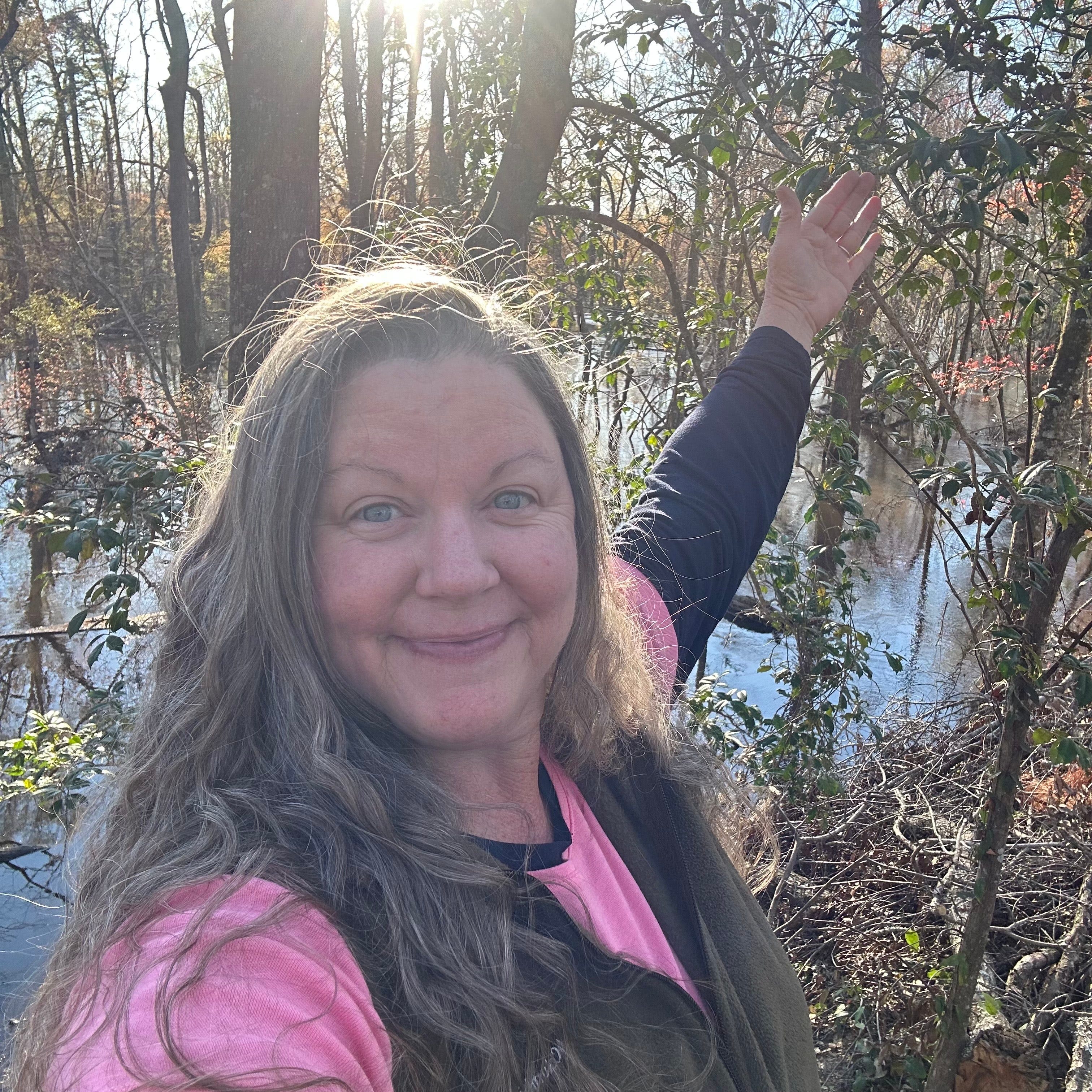
🌀 Congratulations to Kory Wells
When I travel, I love to stay in people’s homes, and staying with the poet Kory Wells in Murfreesboro, Tennessee was tender and meaningful. Kory is a pro at hospitality, and she had filled a gift basket and stocked the bedside table with treats and laid out books she thought I might like to see.
We were acquaintances already, destined to become friends, and a couple of nights in her home sealed the deal.
Lucky for me, Kory signed up for my summer memoir course, “Write Your Own Story.” Like a sizable number of people in that course, she already has books to her name—Sugar Fix, Heaven Was the Moon—but they are poetry, and she’s now writing memoir.
On Aug. 21, Vodka Yonic announced that Kory Wells had won their first Vodka Tonic Writing Contest! Her flash essay, “an intimate look at Tennessee through the lens of family, memory and place,” was published in the Nashville Scene. Kory writes the Substack Bright Flicker.
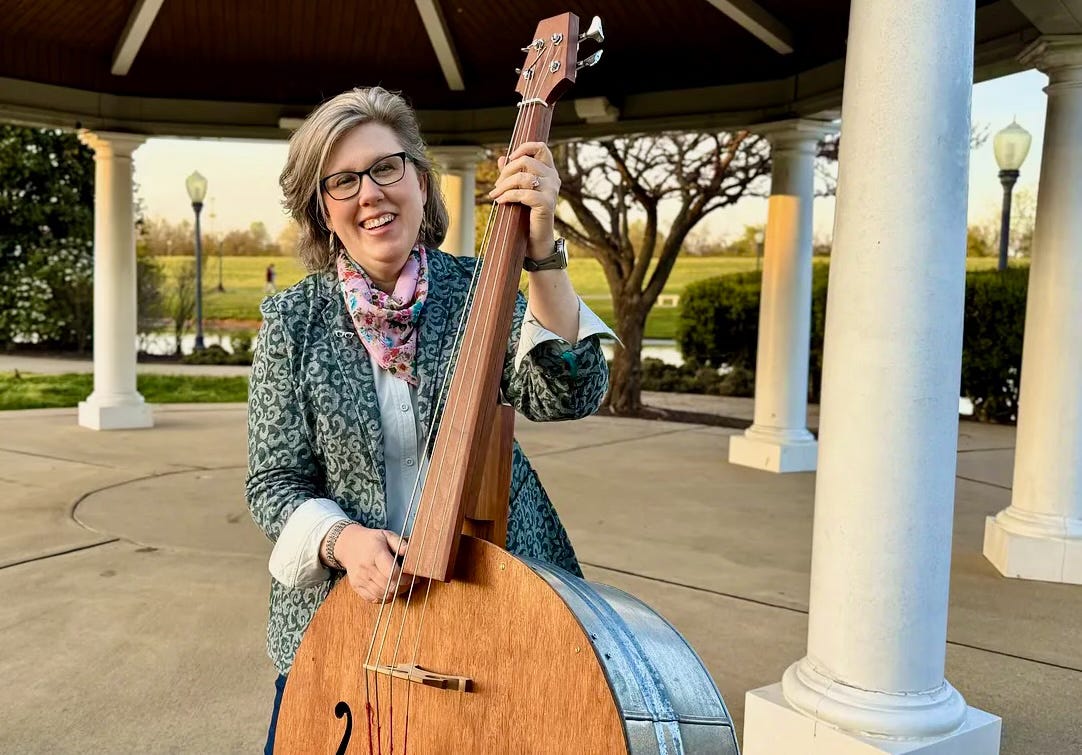
🌀 Congratulations to Shavaun McGinty
Shavaun was in my summer memoir course. Her micro-essay, “Alli’s Comb,” just published on the Substack lit-mag and memorial project, The Keepthings, edited by Deborah Way, former deputy editor of O: The Oprah Magazine. These stories repost on Instagram. This is an amazing project, and if you haven’t heard about it, I’m glad to introduce it to you. I hope you send some of your work to Deborah.
🌀 New Book Series: Ecologia
The University of Virginia Press has announced a new book series, Ecologia, with which it hopes “to inspire new thinking about how life in all its myriad forms may thrive.” The editors—Paul Bogard, Nicolette Cagle, and Jennifer Westerman—welcome creative nonfiction manuscripts with broad public and classroom appeal written by scientists, naturalists, nature writers, and journalists. Send proposals to ecologiauvapress@gmail.com. You can find a tiny bit more info at their website.
🌀 Write the Urban Sacred With Me in Atlanta
I’m teaching a day-long workshop in Atlanta, Georgia on October 4—"Thresholds and Presence: Writing the Urban Sacred.” Cost is $199, which includes coffee, snacks, lunch, and copy of Craft and Current.
🌀 Kickstarter to Launch Oct. 5
As of today, 242 people are following the Kickstarter project for Journey in Place. I have at last set a launch date of Oct. 5. The Kickstarter will run for 20 days, until October 25. Both those dates are set because of the numbers, 10-5-25-10-25-25. I’ve been delayed by my printer, who is now shipping me copies of the Course Edition of Journey in Place. A few hundred people took a yearlong Journey in Place course with me, which became this book (with a few things added). Those folks need their special edition book before I can release the trade version. However, I have word that the special-edition books arrive later this week, so I’m moving forward with the trade launch.
🌀 I Can’t Promise a ROI, But I Can Promise 5 Things
Twenty-one writers have signed up for my Magical Craft of Creative Nonfiction, which starts in one week—Tuesday, Sept. 16. It runs on Tuesdays 7-9 pm Eastern US/Canada Time, ending Tuesday, Nov. 4, 2025, with an Open Mic scheduled for Nov. 11. Join us if you’re ready. The cost if $475. I want to be completely honest and say that I can’t see you getting a Return on Investment for that money. The writing industry is changing dramatically and quickly. However, what you can get is:
Motivation to write
New ideas for writing and publishing
Lots of practice with craft and structure
New colleagues
My belief in you and your work
🌀 Read This Very Important Essay
Kevin Kelly, one of the co-founders of Wired magazine, has started a Substack. He posted a killer article in August, “Everything I Know About Self-Publishing,” which is well worth the read. You see what’s coming. I’ve told you, he’s telling you. Get out ahead of the curve.
With Gigantic Thanks for Your Support and Your Love
I want to deliver a resounding thank you to the following people who became paying subscribers to Spiral-Bound over the summer.
Ron Balthazor, George Barrett, Sandy Beck, Felton Harvey Bohannon, Heather Booth, Rachel Bowen, Patricia Coleman, Terry Doland, Cynthia Jo Everett, Shayna Foote, Judy Galliher, Thomas Gery, Samuel Hendrickson, Jeanmarie Hill, Cristy Johnsrud, Randell Jones, Holly Kitterman, Lisa Lennington, Elizabeth Little, Cyndi A. Lloyd, Maria Luz O’Rourke, Peggy Piacenza, Anandi Premlall, Sarah Prendergast, Jamie Rhorer, C.L. Smith, Frederick Waage, Marsa Williams, and Jim Wimmer.
Thank you to Sara Sanders, old friend, professor emerita at Coastal Carolina University, who became a founding subscriber. When I wrote her to say “Thank you, thank you!” she replied:
I love the way you are imagining and bringing into reality worlds of possibility, and I love being able to be connected to all of that.
I love your grand mothering of Little Fawn, and I love the way you are sharing that story and many others with your readers.
Wishing you joy and an abundance of blessings today and every day.
Sara
Oh my. I could write a tome in response. I've been part of a writers group since 2006. We have published four books, did a podcast for a few years, we've gone on hilarious road trips, continue to meet monthly and read, and on and on and on. The only reason I haven't written about our group, ridiculously called The Mystic Order of East Alabama Fiction Writers, is because I'm afraid that for our story to fit into a narrative, we will have to get in a big fight and break up like the Beatles. Because I KNOW THE TROPES! :) We meet monthly at each other's houses. There are six of us because it's the perfect number, something about numerology according to one of us. Janisse, you are friends with Katie Jackson, one of the Mystics, who was part of Old Enough and has taken your courses. Small, lovely circles indeed. We are messy but we encourage each other and mostly, we push each other to keep writing. Sometimes we were aprons to our readings. We recently did a workshop about writers groups. I'm proud to say that many of the things you mentioned here were in the part I did. I reread the DELIGHTFUL chapter in Wild Card Quilt about your group and talked about you and your group in our presentation. Oh my. I should just give it all up and write about the Mystics. We have outrageous stories, we are friends, we have ridiculous adventures, one of us is a lawyer and has had to defend all of us but one. I love my Mystic Sisters so much. Also, kudos to Becki Clifton and Jane Pike, two of my favorite Substack friends. I'll stop now, but honestly, I feel like we should all be sitting in one big room, or around a bonfire (much better) talking about all this. Thank you for this post. Now I'm off to read the article.
Excellent reflections on writing group and critique groups.
I've only been in writing groups using the Amherst approach (totally supportive) and am rather apprehensive about the group that's spun off your memoir class that I now am a part of.
They're all wonderful folks, but I'm worried about the critique emphasis. I'll see how it goes.